
If you build links often, you have probably seen this happen before. A website looks good at first. The DR is solid, the traffic seems fine, and the site looks decent on the surface. Then you dig deeper and start to notice problems. The site ranks for strange keywords, the content feels thin, the outbound links point to spammy niches, and there is no real brand behind it. That is why you should never judge a website by DR alone.
Metrics like DR, DA, TF, and AS can still help, but only as a first filter. They are useful for sorting a list fast, not for making the final call. A site can have strong scores and still be a weak link prospect if the content is poor, the traffic is low quality, or the site exists mainly to sell links. Google also makes it clear that spam and link schemes can affect how pages perform in search, which is one more reason to review websites carefully before you place a link.
One stat shows why surface level checks are not enough. Ahrefs found that 96.55% of pages get no organic traffic from Google. That means when a site does show traffic, it matters, but traffic alone still does not prove quality. You need to understand what kind of traffic the site gets, where it comes from, and whether it makes sense for the niche.
A better way to vet a website is to look at the full picture. That means reviewing keyword relevance, traffic trends, traffic location, top pages, link ratios, content quality, outbound links, branding, and social proof. When all of those pieces line up, the site is much more likely to be worth your time and budget.
Start With Metrics, but Do Not Stop There
DR, DA, TF, and AS are useful because they help you scan a list of prospects quickly. That is where they do their best work. The problem starts when people treat those numbers as the whole story. These are third party estimates, not direct signals from Google, so they should be treated as clues rather than proof.
That matters even more because metrics can be manipulated. On marketplaces like Fiverr, you can find people selling DR increases, which tells you right away that a stronger number does not always mean a stronger website. In some cases, the metric goes up while the actual site quality stays the same, or gets worse.
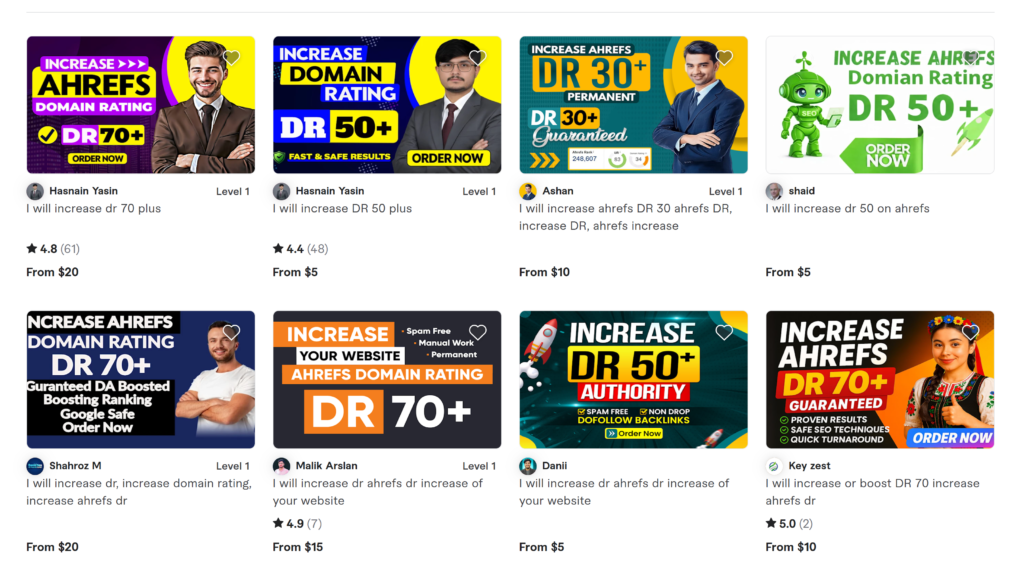
A website can have a good DR and still be a bad fit for link building. It may rank for junk terms, publish weak articles, or sell links to grey niches. It may also have traffic that looks fine in a tool, but falls apart once you check the details. A good rule is simple: use metrics to sort, then use real review to decide.
Check if the Organic Keywords Make Sense
One of the best ways to judge a site is to look at the keywords it ranks for and ask whether they match the kind of site it claims to be. If the site is about home services but ranks for random health terms, celeb queries, or coupon phrases, that is a bad sign. If the site says it serves B2B buyers in one niche but most of its rankings come from unrelated topics, you should look closer.
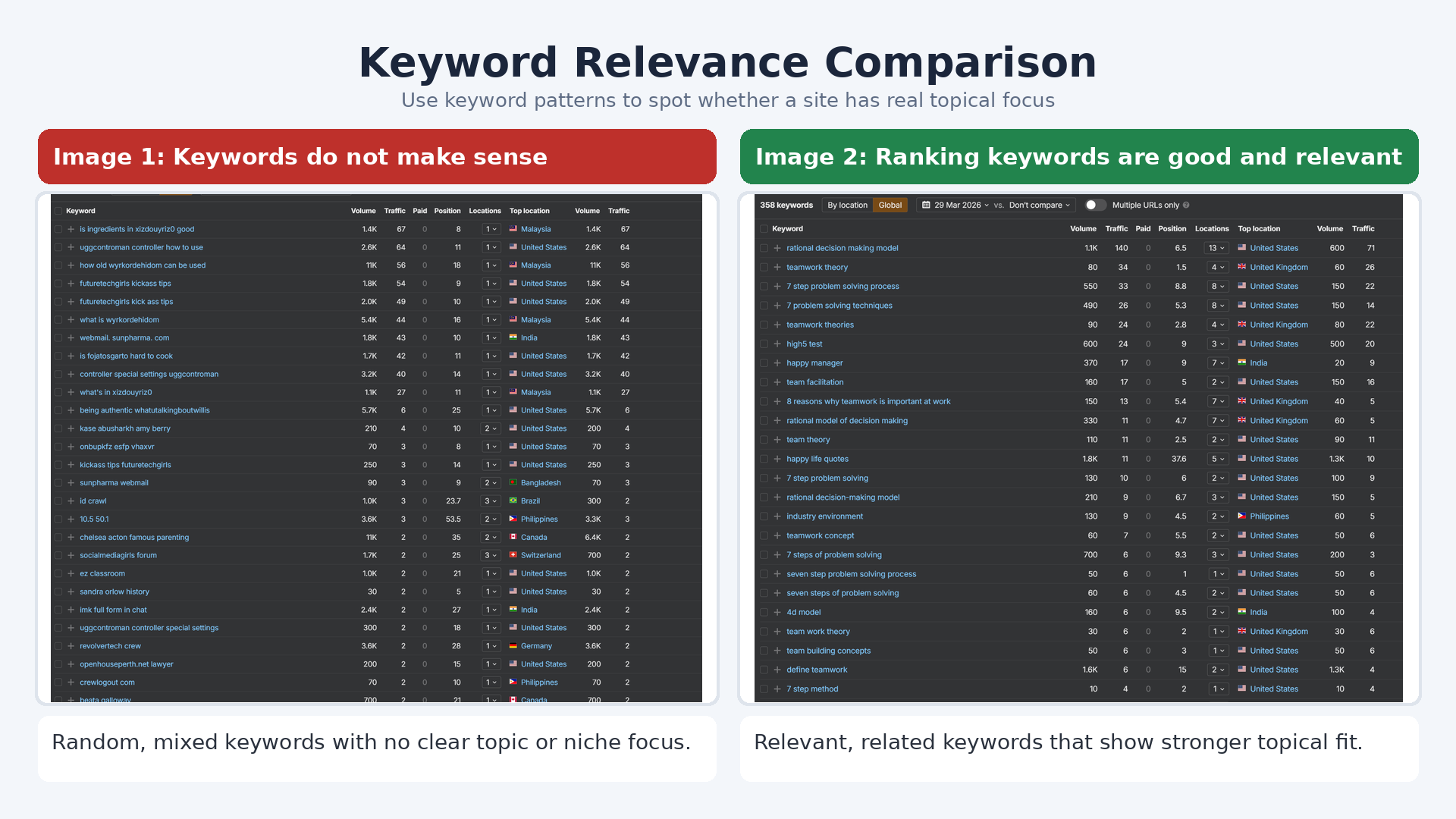
The main goal is not just to see that a site has keywords. You want to see that the keywords are relevant. Real websites usually rank for terms that fit their topic, brand, and audience. Sites built mainly for link sales often rank for a strange mix of terms that do not add up.
Check the Traffic Trend, Not Just the Traffic Count
A site with traffic today can still be a weak link prospect. That is why you should not stop at the raw number. Open the traffic chart and look at the trend over time. Ask whether the traffic looks steady, whether it spiked too fast, or whether it crashed hard and never recovered.
A strong site often has a trend that feels natural. It may go up, dip for a while, and climb again. That is normal. What you want to watch for are patterns that suggest the site was propped up by one lucky page, hit hard by an update, or built on shaky ground.
The better question is not “How much traffic does this site get?” The better question is “Does the traffic story make sense?”
Check Traffic by Country
Traffic by country is one of the most useful checks in link building, and many people still skip it. If your client wants links that make sense for the US, UK, Canada, or Australia, then the traffic location should support that goal.
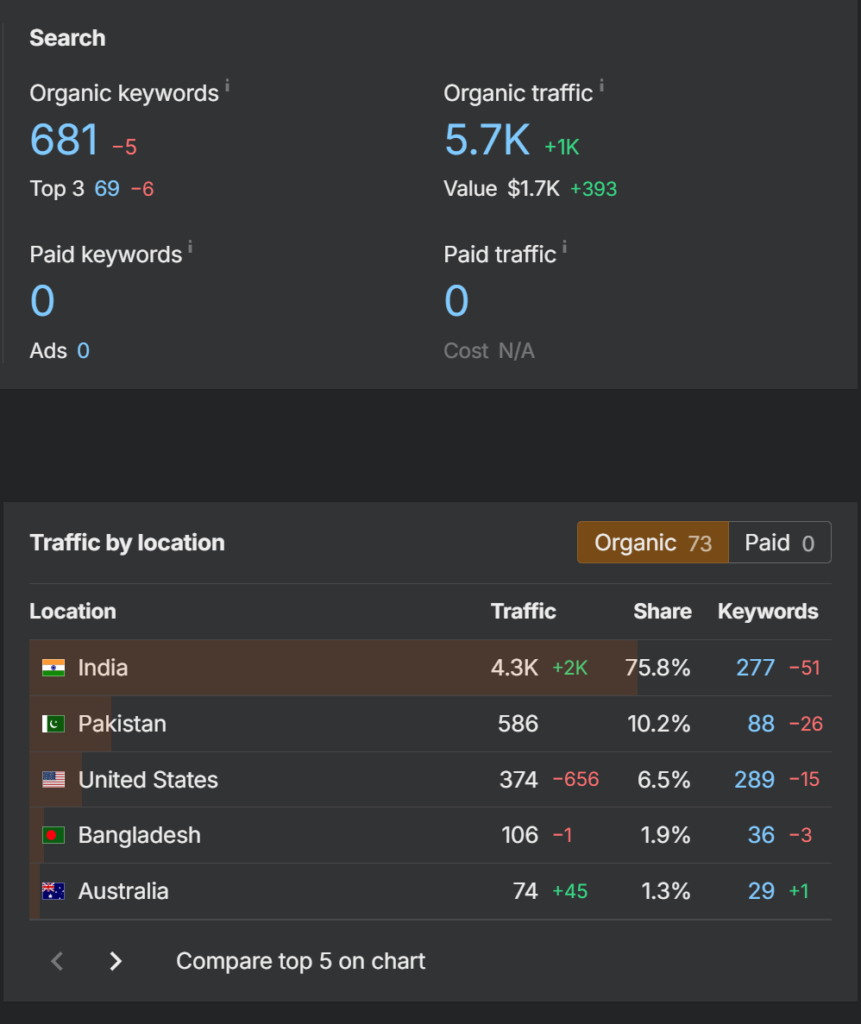
If most of the traffic comes from India, Bangladesh, Pakistan, or other regions outside the target market, it does not always mean the site is bad. It does mean you should pause and ask more questions. Does the country mix make sense for the site’s niche? Is that traffic useful for the kind of link you want? Does the site really serve the market it claims to target?
A site can have decent traffic numbers and still be a poor fit if that traffic comes from the wrong places. This is especially important when you are doing link building for businesses that care about market relevance, not just raw SEO metrics.
Check the Top Pages
Do not judge a website only from the home page or domain overview. Look at the top pages report and see where the traffic really comes from. Ahrefs explains that its Top Pages report helps show which pages bring in the most organic traffic, which makes it one of the best ways to check whether a domain has real depth.
You want to know whether the traffic is spread across several useful pages or concentrated on just one URL. If one page carries most of the site’s traffic, that is not always a deal breaker, but it is a reason to investigate further. Maybe that page ranks for one lucky keyword while the rest of the site does very little. Maybe the page is off topic from the site’s main focus. Maybe the domain looks strong in a tool, but the site itself has very little depth.
Strong websites usually have more than one page doing useful work. That is what you want to see.
Look at the Link Ratio
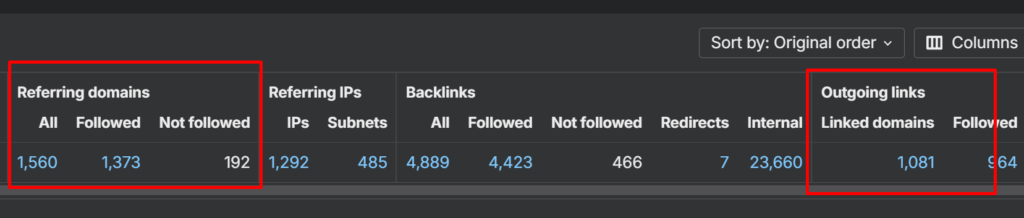
The link profile can tell you a lot if you review it with a bit of care. One easy check is the gap between referring domains and total backlinks. If a site has a huge number of backlinks but only a small number of referring domains, that can suggest sitewide links, repeated links, or a profile padded in ways that do not look natural.
There is no magic ratio that tells you a site is good or bad. The point is to see whether the profile feels normal. SEO tools surface this split because it helps you spot when a big backlink count is hiding a weak or unbalanced profile.
This is another area where large numbers can mislead you. A strong looking backlink total does not always mean the site has earned broad trust across many real websites.
Read the Articles Like a Real Person
This step is simple, but it works. Open a few posts and read them properly. Ask yourself whether the content feels real, useful, and edited. Does it have a clear point? Does it sound like it was written for people, or does it feel like filler built to hold links?
A lot of weak websites fail this test right away. You will often see vague intros, bland copy, weak flow, odd phrasing, and no real depth. Some sites post across many unrelated topics with no clear niche. Others use fake looking bylines or publish content that feels mass produced.
When the articles are poor, that matters. You are not just buying a metric. You are placing a link in content that should feel worth reading.
Check the Outbound Links for Grey Signs
This is one of the fastest filters you can use. Open a few articles and inspect the links going out. Look for patterns tied to casino, adult, pills, payday loans, essay writing, crypto betting, and other spam heavy niches.
One questionable link does not always mean the site is bad. But if you keep seeing those kinds of outbound links, that is a strong reason to step back. Google’s spam policies warn against tactics meant to manipulate search, and Google has also said its systems can neutralize spammy links so they no longer pass value.
A good site does not need to be perfect, but it should not feel like it is willing to link to any niche as long as someone pays.
Look for Signs of a Real Brand
One of the best quality checks is also one of the most human. Ask whether there is a real brand behind the site. Does it have a real name, a real service, a product, a founder, or a team? Is there an About page with actual detail? Do the social profiles look real and active?
A site that only has blog posts is not always bad, but it deserves more review. If there is no clear brand, no product, no service, no team, and no social proof, there is a good chance the site exists mainly to publish content for links.
Real brands leave real signs. They have a point of view, a niche, users, and some kind of public identity. If none of that is there, you should ask why.
Check Whether the Site Feels Built for Users or Built for Link Sales
This is less about one metric and more about the full feel of the site. When you browse it, what do you see? A real site usually has a clear purpose, a niche that makes sense, pages that support each other, a consistent voice, and useful content. A made for links site often has mixed topics, weak design, too many guest style posts, odd anchors in body copy, and no clear reason to exist beyond selling placements.
It is worth trusting your gut here. If the site feels off, that matters. Experienced link builders do not just read the tool data. They read the site itself.
Use Social Checks as a Trust Signal
Social profiles are not required for every website, but they help. If a site claims to be a real brand, its social pages should support that. The profiles do not need huge reach. They just need to feel genuine.
Look for live posts, brand consistency, real names, and signs of an actual audience. Dead or fake looking socials are not always enough to reject a site on their own, but when a site has weak branding and no social proof, that adds to the risk.
A Simple Review Process You Can Use
Before you approve any site, run through a quick check. The metrics should be decent, but not the only reason you like it. The organic keywords should fit the niche. The traffic trend should look normal. The traffic by country should make sense for your target market. The top pages should show real depth. The link ratio should not look padded. The articles should read well. The outbound links should look clean. The site should have some sign of a real brand or real people behind it. The social presence should support that picture.
If too many of those checks fail, move on. There are too many sites out there to force a weak fit.
Where LinkCounts Fits In
The hard part is not knowing what to check. The hard part is checking all of it the same way every time, especially when you are working through a large list of prospects. That is where LinkCounts fits in.
A good link building team needs more than DR filters. It needs a repeatable way to review trust, traffic fit, topical fit, and risk. LinkCounts can help make that review faster and more consistent across a full list of sites. That matters even more for businesses and agencies, where different team members may judge prospects in different ways.
If you want a cleaner way to vet link opportunities and build from a stronger list of websites, book a call and let’s talk through your goals.
Final Thoughts
A good website for link building is not just a website with nice metrics. It is a site that makes sense as a whole. The traffic should make sense. The keywords should make sense. The brand should make sense. The content should make sense. The outbound links should make sense. Just as important, the site should be relevant to your niche, your audience, or the topic of the page you want to build links to.
That relevance matters because even a strong site on paper can be a weak link opportunity if the fit feels forced. A backlink works better when it lives on a site and page where your link makes sense naturally.
If a website looks good in a tool but bad in real life, trust the real life review. That approach will save you time, save you money, and help you build links that are far more likely to hold value.